Polygonum aubertii
Silver Lace Vine
Description
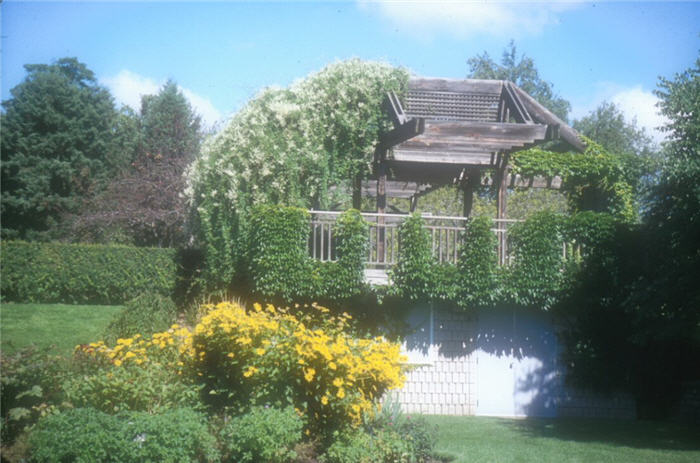
Silver lace vine is a vigorous, adaptable, fast-growing, deciduous, twining vine that typically grows 25-35’ (12-15’ in one year). Ovate leaves (to 3.5” long) emerge tinged with red, but mature to a bright green. Masses of small, fragrant, creamy white flowers in profuse, narrow panicles cover the vine over a long bloom period of mid-summer to fall. Best grown in well-drained, sandy loams with regular moisture in full sun to part shade. Tolerates some drought. Tolerant of a wide range of soil conditions. Plants are less apt to spread invasively in poor, lean soils. Vines need a support structure upon which to grow unless grown as a sprawling ground cover. This is a somewhat weedy vine that spreads quickly by rhizomes. May be pruned back each year in late winter to early spring. To renovate, prune back in late winter to 1-3’ from the ground. To keep within bounds, trim off excess growth as needed throughout the year. Provides quick cover in sun or shade for trellises, fences, arbors, pergolas and walls. May also be sprawled over the ground as a ground cover to camouflage rock piles or old tree stumps or to provide soil stabilization for banks. Best to grow on structures or grounds that are not adjacent to areas where the invasive tendencies of this vine could become a problem.
Plant Type
Ground cover, Vine
Height Range
6-12', 25-40'
Flower Color
White
Flower Season
Summer, Fall
Leaf Color
Green, Red
Bark Color
n/a
Fruit Color
n/a
Fruit Season
n/a
Sun
Full, Half
Water
Low, Medium
Growth Rate
Fast
Soil Type
Sandy, Rocky
Soil Condition
Average, Poor, Well-drained, Moist
Soil pH
Acid, Neutral, Basic
Adverse Factors
Invasive
Design Styles
English Cottage, Woodland
Accenting Features
Fall Color, Fragrance, Showy Flowers
Seasonal Interest
Summer, Fall
Location Uses
Background, Walls / Fences
Special Uses
Cascade, Erosion Control, Hedge, Screen, Naturalizing
Attracts Wildlife
n/a
Water Saving Tip:
Check your irrigation controller once a month, and adjust as necessary.
Most plants require only one-third as much water in winter as they do in summer.