Laurus nobilis
Bay Laurel
Description
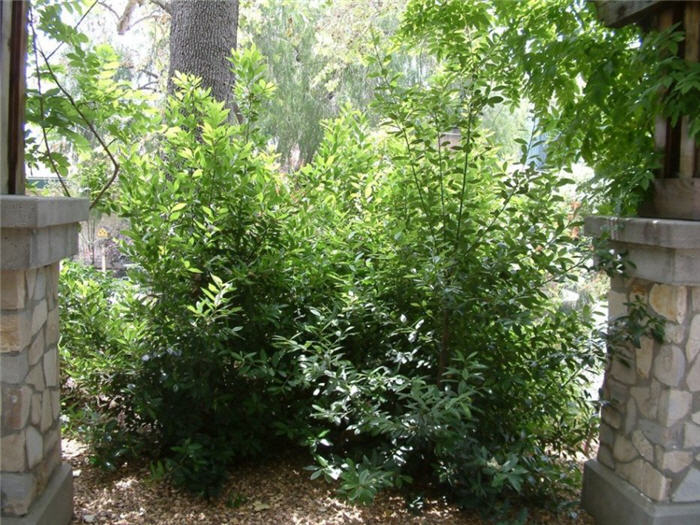
Laurus nobilis, commonly called bay laurel, is native to the Mediterranean. It is a pyramidal, aromatic, evergreen tree or large shrub that grows to as much as 60’ tall, but is usually seen much smaller (10-30’ tall). For garden purposes, it is often pruned to 8’ tall or less. Leathery, thick, elliptic to oval, glossy dark green leaves (2-4” long) from this tree are commonly used as a culinary herb. Small yellowish green flowers bloom in spring. Trees are dioecious (separate male and female trees). Flowers on female plants, if pollinated, are followed by single-seeded purple-black berries. Winter hardy to USDA Zones 8-10 where it is best grown in rich, moist, well-drained soils in full sun to part shade. North of Zone 8, it may be grown in containers as a houseplant. Place containers outdoors in summer in part shade locations. Bring containers indoors before fall frost for overwintering in cool areas with bright light. Size and shape of this plant can easily be controlled by pruning. Outdoors, it makes an interesting specimen for shady areas of the landscape including patios, herb gardens and woodland gardens. May be grown as a screen. Excellent houseplant.
Plant Type
Tree, Shrub
Height Range
6-12', 12-25', 25-40'
Flower Color
Green, Yellow
Flower Season
Spring
Leaf Color
Dark Green
Bark Color
Brown
Fruit Color
Black, Purple
Fruit Season
Summer
Leaf Season
Evergreen
Sun
Full, Half
Water
Medium
Growth Rate
Slow
Soil Type
Sandy, Loam, Rocky
Soil Condition
Average, Well-drained
Soil pH
Neutral, Basic
Adverse Factors
n/a
Design Styles
English Cottage, Formal, Mediterranean, Ranch, Spanish, Woodland
Accenting Features
Fragrance, Showy Flowers, Specimen, Standard
Seasonal Interest
Spring, Summer
Location Uses
Background, Shrub Border, Patio, Walls / Fences
Special Uses
Container, Hedge, Screen, Topiary, Wind Break
Attracts Wildlife
n/a
Water Saving Tip:
Fix leaking sprinklers, valves, and pipes.
One broken spray sprinkler can waste 10 gallons per minute - or 100 gallons in a typical 10 minute watering cycle.