Lantana x 'New Gold'
New Gold Lantana
Description
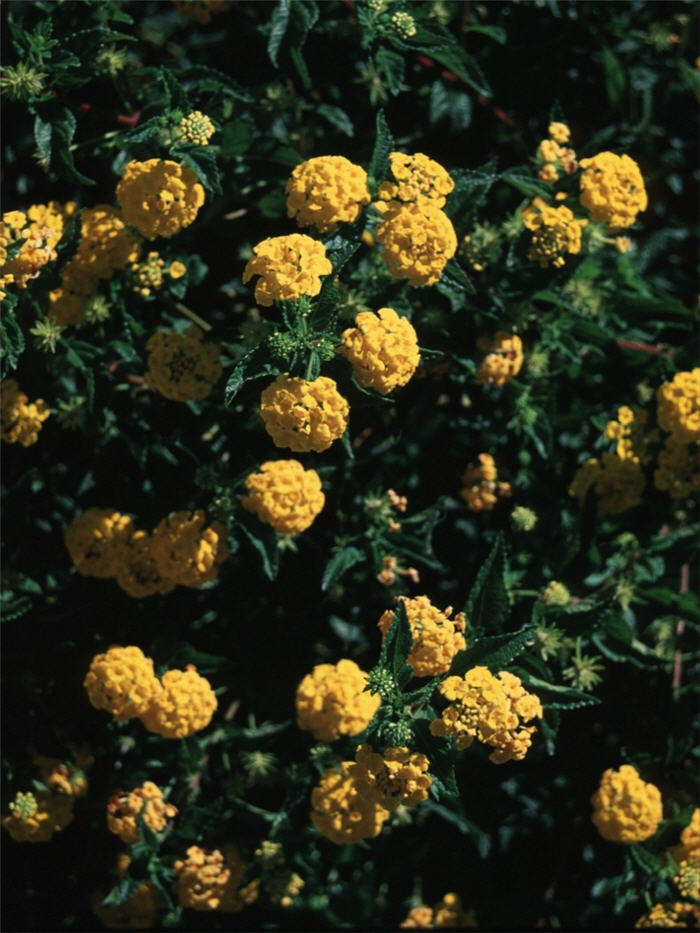
New gold lantana is low mounding evergreen flowering shrub developed through hybridization of Lantana camara and Lantana montevidensis. It grows quickly to 2-3 ft. high, 6 ft. across that becomes covered with round ball-like flower heads that are gold in color for long periods of time in spring and summer. Deep green leaves are 2-4 in. long and pungent when crushed. It does best in full sun with well draining loam. Tolerates wind and heat. It has a spreading and mounding habit. Lantanas naturally want to become very wide plants. For lantana to remain a low maintenance plant, they must be planted where they have space to become their full size or must be planned as a hedge by design. Prune to cut back lightly as a hedge almost any time of the year. Foliage and branches may be damaged by frost, but plants will almost always rebound once the weather warms up in spring. If possible, and depending on appearance, it is better to wait to remove frost damaged branches and foliage until all risk of additional frost has passed for the season because the damaged material protects the rest of the plant from further frost damage. Plants can be cut back as hard as desired, including almost all the way to the ground, in early spring, and most often rebound vigorously. Deep water the plant every 2 weeks, after it's established.
Plant Type
Shrub
Height Range
1-3'
Flower Color
Gold, Yellow
Flower Season
Spring, Summer, Constant
Leaf Color
Dark Green
Bark Color
n/a
Fruit Color
n/a
Fruit Season
n/a
Sun
Full
Water
Low
Growth Rate
Fast
Soil Type
Sandy, Loam, Rocky
Soil Condition
Average, Well-drained
Soil pH
Neutral
Adverse Factors
n/a
Design Styles
Meadow, Mediterranean, Ranch, Spanish
Accenting Features
Fragrance, Showy Flowers
Seasonal Interest
Spring, Summer
Location Uses
Entry, Shrub Border, Foundation, Patio, Park, Parking Lot, Raised Planter, Walkways, With Rocks
Special Uses
Cascade, Container, Erosion Control, Filler, Mass Planting
Attracts Wildlife
Butterflies
Water Saving Tip:
Apply a layer of mulch around plants to reduce moisture loss.
Choose organic mulches, such as shredded bark, compost or aged sawdust.