Common name:Sea Lavender
Botanical name:Limonium perezii
This mounding shrub will reach about 3' high and has large, dark green leaves with small blue and purple flowers that bloom in spring and summer.

Common name:Powis Castle Artemisia
Botanical name:Artemisia 'Powis Castle'
This mounding shrub reaches 3 ft. high and up to 5ft. wide with fine silver foliage. - Cornflower Farms

Common name:Mexican Bush Sage
Botanical name:Salvia leucantha
The Mexican Sage is a bushy shrub that grows 3'-4' tall and wide. It has hairy white stems, grey-green leaves and velvet-like purple flower spikes that bloom summer through fall. This shrub tolerates sun, light shade, little water, and is hardy to 15 degrees F. The Mexican sage is drought tolerant and attracts hummingbirds. -Cornflower Farms

Common name:Heavenly Bamboo
Botanical name:Nandina domestica
Nandina domestica is a graceful upright shrub that grows from 3' to 6' in height. It gets its name from its bamboo-like growth habit. When thinned from the center, it bears a remarkable resemblance to bamboo. It is best used in groups. It can be used in a shaded patio or out in a shrub border with full sun. An interesting feature of Heavenly Bamboo is the bronze color in the new growth when planted in full sun. It also bears clusters of white flowers in the spring.

Common name:Lamb's Ear
Botanical name:Stachys byzantina
This tiny shrub will grow less than 1' tall and has medium-size, greyish-green leaves with blue and lavender flowers that bloom in the spring.

Common name:Catmint
Botanical name:Nepeta X faassenii
Nepeta faassenii makes soft, grey-green, undulating mounds to 1.5' high in bloom, spreading 3'-4' wide. The small leaves are attractive to cats. This perennial has lavender blue flowers in summer. Catmint can be planted in sun or shade and needs medium amount of water. Prune spent flowers to encourage more blooms.
Common name:Smoke Tree
Botanical name:Cotinus coggygria 'Purpureus'
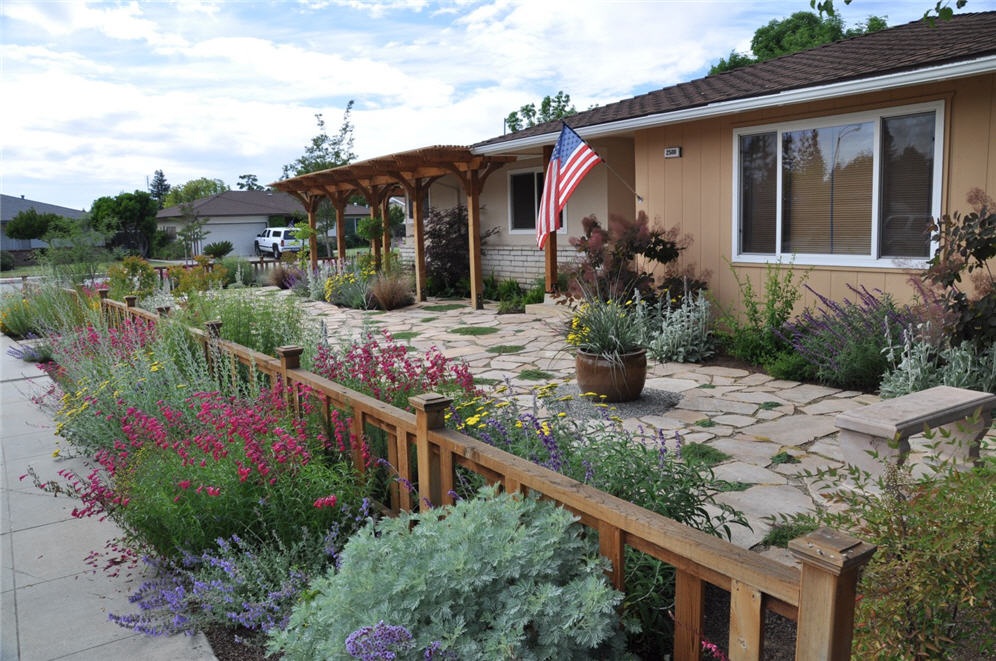
A deciduous shrub or small tree that grows up to 10' tall, the "Purpureus" is grown for its wispy, thread-like flower clusters and outstanding fall color. Its foliage has a reddish purple color that turns somewhat green in summer. This plant requires sun to part shade, with little or no summer water. -Monterey Bay Nursery

Common name:Moonshine Yarrow, Milfoil, Sneezewo
Botanical name:Achillea 'Moonshine'
Long, straight stems with pale yellow flowers are striking on the mats of green to grey-green leaves of this plant, which are flatter and less divided than those of the Achillea millefolium. This Yarrow propagates easily from rooted cuttings or divisions which should be performed in the early spring or fall. Following bloom, one should dead head the plant and divide the clumps when it appears crowded. Introduced by Alan Bloom in the 1950's.
Common name:Leatherleaf Sedge
Botanical name:Carex buchananii
This orange-bronze ornamental grass/reed is 2-3'H x 1-2' W and does best in full sun to part shade.
Common name:Red Yucca
Botanical name:Hesperaloe parviflora
Spectacular accent for desert gardens. Tolerates drought, full sun, reflected heat, poor soils & cold to at least 0 degrees F. Rosettes of leaves to about 3'-4' tall x 6' wide. Red flower stalks emerge in spring and remain on plant till end of summer. Evergreen. Will spread to form crowded grasslike clump. Flowers pink to nearly red. Native to TX and Mexico. Drought resistant but will appear better and bloom longer with added moisture. Very frost tolerant. Leaves grey-green. Soil tolerant.
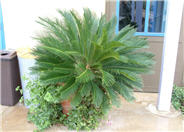
Common name:Sago-Palm
Botanical name:Cycas revoluta
Sago Palm resembles small palms; it is evergreen. It can slowly grow to 10'. It is used for a tropical effect and also looks great in planters. In the low desert, light shade and additional moisture are best. Side sprouts can form multi-trunked individuals. Apply fertilizer at leaf expansion. This plant has few pests.
Designer: Terri Nichols
Photographer: GardenSoft
Practice grass-cycling by leaving short grass clippings on lawns after mowing, so that nutrients and organic matter are returned to the soil.
Change spray sprinklers to low-flow bubbler or drip systems. Shrubs and trees are ideal candidates for this type of irrigation because the water is applied directly to the root zones.
Remove irrigation water and fertilizer from areas where you don't want weeds to grow.