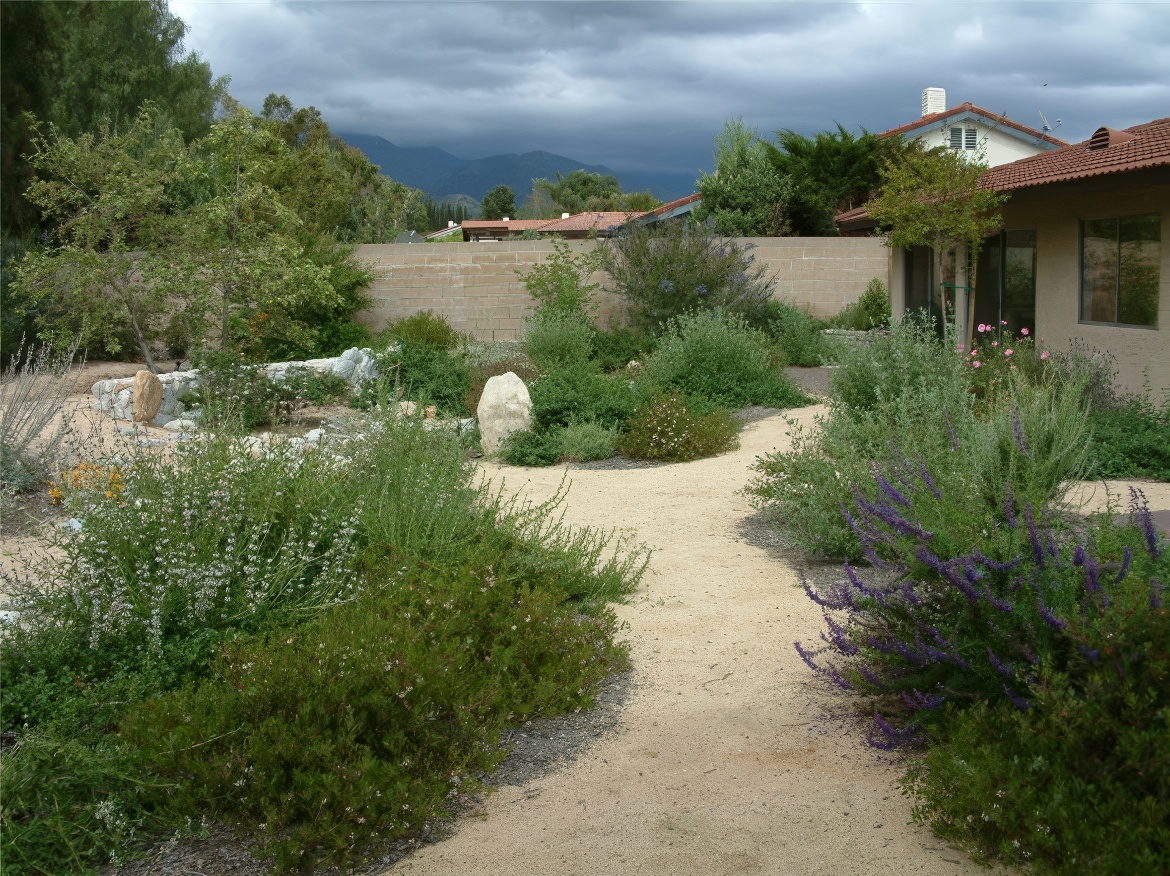
Common name:Woolly Blue Curls
Botanical name:Trichostema lanatum
The Woolly Blue Curls is an evergreen shrub that reaches 3'-5' high. It has an open branching habit and has long stalks of brilliant purple woolly flowers in the spring and summer. This shrub is native to CA, is drought tolerant, and attracts hummingbirds. -Cornflower Farms
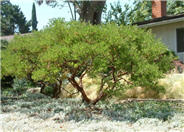
Common name:Howard McMinn Manzanita
Botanical name:Arctostaphylos densiflora 'Howard McMinn
This shrub is highly appreciated for its decorative characteristics, which include a dense show of small, pale pink, urn-shaped flowers. Above all, it is the mahogany-red to brown bark (which peels beautifully) that is the major attraction. Its fruit resembles the tike apple, and the flowers contrast perfectly to the light green leaf (which can get rather tough). It blooms from late winter to spring. - Cornflower Farms
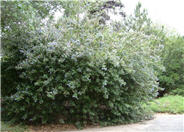
Common name:Ray Hartman Ceanothus
Botanical name:Ceanothus 'Ray Hartman'
The 'Ray Hartman' is the most commonly grown tree variety. It rarely grows less than 15' tall in part shade, but often makes a broad shrub to 10' tall and 15' wide in full sun with restricted watering. Light burgundy buds appear in late winter and early spring, turning to spikes of medium blue flowers with a slight dusty or greyish cast. The smooth, rounded leaves form an excellent browse for deer. -Monterey Bay Nursery

Common name:Black Sage
Botanical name:Salvia mellifera
This woody shrub has fragrant, dark green leaves with blue, white, or lilac flowers that bloom in the spring and summer.
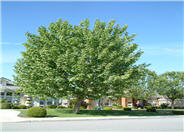
Common name:California Sycamore
Botanical name:Platanus racemosa
The California Sycamore is a fast growing, deciduous tree that reaches up to 40'-50' high. It tolerates heat, smog, and drought conditions as well as moist conditions; it is native to riparian areas. It has an interesting mottled bark when the tree is bare in winter.
Designer: Bob Perry
Photographer: GardenSoft
Maintain a two to four inch layer of mulch on the soil surface to reduce weeds, infiltrate rain water, and reduce compaction.
Fix leaking sprinklers, valves, and pipes.
One broken spray sprinkler can waste 10 gallons per minute - or 100 gallons in a typical 10 minute watering cycle.
Attract, or buy beneficial insects such as ladybugs and lacewings to control pest outbreaks in your garden.