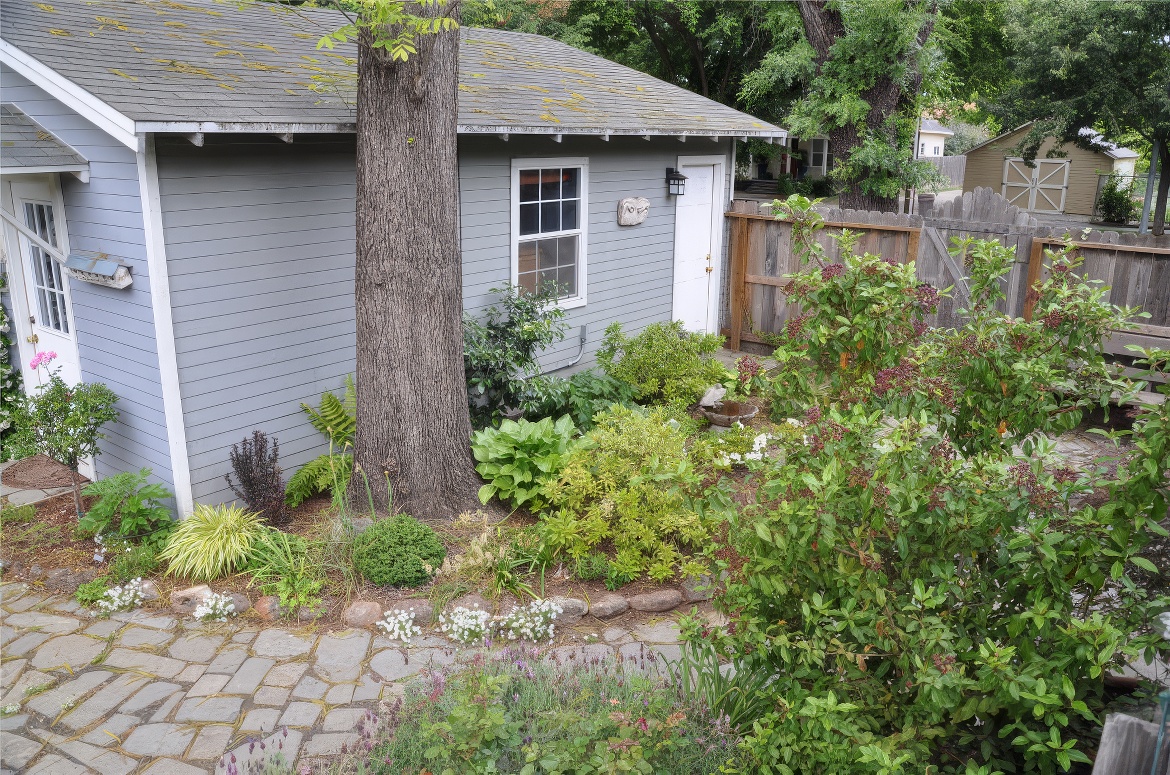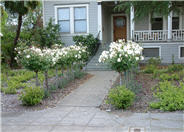
Common name:Tree Roses
Botanical name:Rosa Tree varieties
Tree roses are actually shrubs that have been grafted or grown in a way that looks like a tree, ie with a trunk. Tree roses can be floribundas, hybrid teas, or grandifloras. They are typically used as specimen plants. Make sure the plant is tied to a stake in case of strong winds.

Common name:Spring Bouquet Compact Laurustinus
Botanical name:Viburnum tinus 'Spring Bouquet'
The 'Spring Bouquet' grows to about 4-6' in height with a compact habit. Its foliage is slimer than the species, darker green color, and the plant can be used as an onamental hedge.

Common name:Hosta (hybrid) assorted
Botanical name:Hosta hybrids
Has various leaf shapes, textures and colors. They form striking clumps. Both flowers and foliage are nice in fresh arrangements. Part to full shade. Keep away from slugs.

Common name:Japanese Camellia
Botanical name:Camellia japonica
An evergreen shrub or small tree, the Camellia japonica can reach 6-15' depending on the variety. It is intended for growth in part sun to shade, with average to little summer watering when established. They make excellent container plants.
-Monterey Bay Nursery
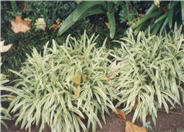
Common name:Silvery Sunproof Blue Lilyturf
Botanical name:Liriope muscari 'Silvery Sunproof'
While similar to the Liriope muscari, the leaves of the 'SIlvery Sunproof' are edged gold, turning white as they mature. It grows best under partial shade and in warm climates.

Common name:Sweet Alyssum
Botanical name:Lobularia maritima
Lobularia maritima is an annual. Low, branching, trailing plant to 1' tall, with narrow or lance-shaped leaves .5" - 2" long. Tiny, 4-petaled white flowers crowded in clusters.
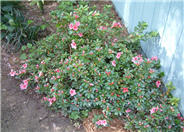
Common name:Hybrid Pink Azalea
Botanical name:Rhodendron Azalea Hybrid Pink
This hybrid Azalea has a medium growth habit and produces white flowers that flush to a strong rosy/pink color in mid-season. It is a, light shade to shade loving plant, desiring a well drained moist humus soil.
Designer: Jim Mathys
Photographer: GardenSoft
Practice grass-cycling by leaving short grass clippings on lawns after mowing, so that nutrients and organic matter are returned to the soil.
Replace turf with groundcovers, trees, and shrubs. If you have areas where no one uses the grass, patches that do not grow well, or a turf area too small to water without runoff, consider replacing the turf with water-efficient landscaping.
Develop healthy soil for plants that are vigorous and naturally pest-resistant.